Press Kit
Everything below is cleared for use in coverage. No permission needed, no embargo.
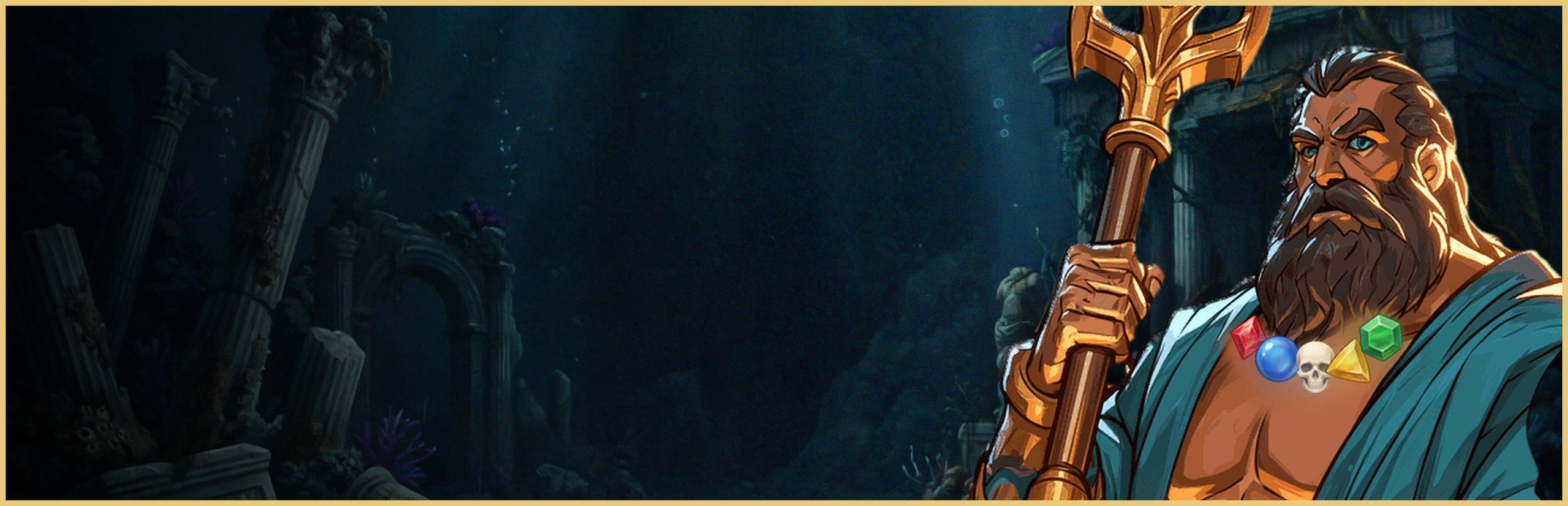
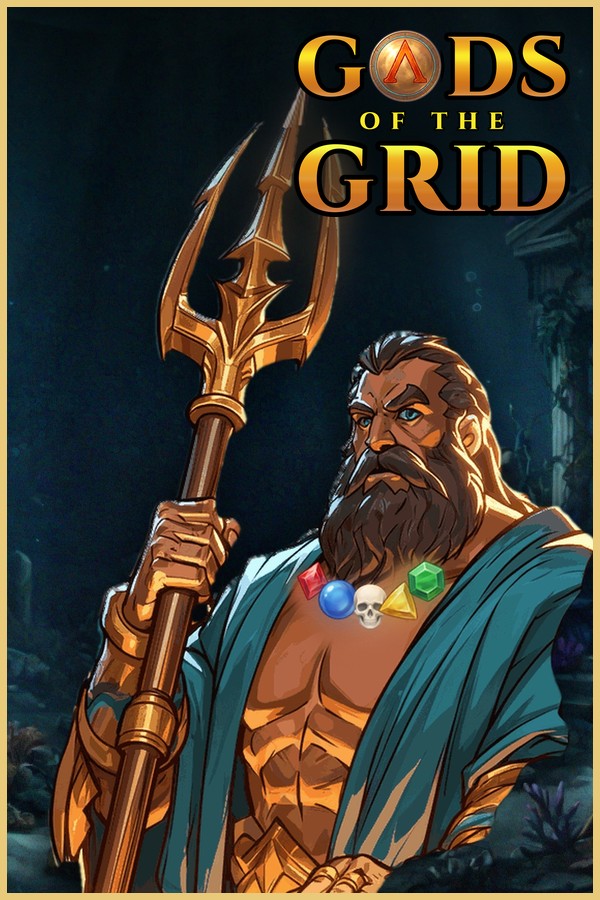
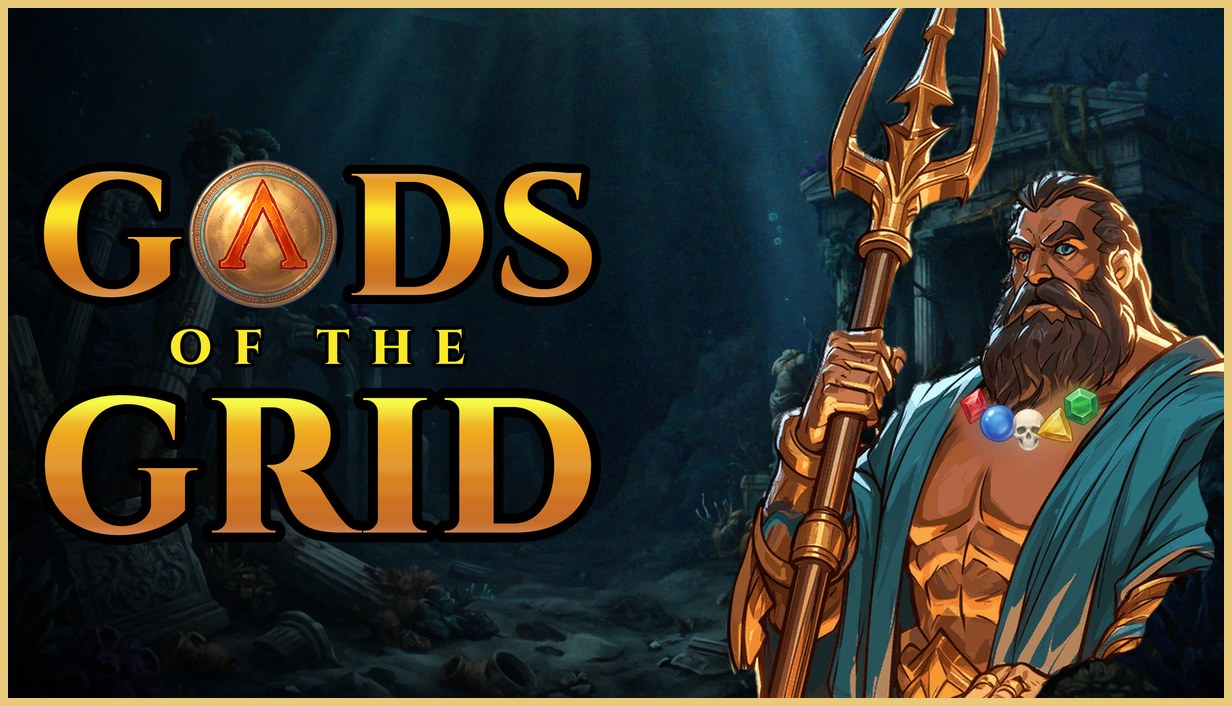
Screenshots
The full desktop and phone sets are in the zip.
Factsheet
| Field | Value |
|---|---|
| Title | Gods of the Grid |
| Developer | Alexandros Tzortzopoulos, solo |
| Publisher | Self-published |
| Platforms | Android on Google Play and iOS on the App Store, both out now. Windows via Steam, Early Access |
| Release date | Steam Early Access, Q4 2026. Android and iOS available now |
| Price | Steam price unannounced. Android and iOS are free to start, with one purchase that unlocks the whole game |
| Genre | Match-3 roguelite RPG |
| Players | Single player, with a global leaderboard and a daily challenge |
| Run length | 20 to 40 minutes, one life |
| Languages | English, Simplified Chinese |
| Website | https://godsofthegrid.com |
| Steam | https://store.steampowered.com/app/4911350 |
| Google Play | https://play.google.com/store/apps/details?id=com.luthy.godsofthegrid |
| App Store | https://apps.apple.com/app/id6795865894 |
| Discord | https://discord.gg/b5xGphKk47 |
| Video | https://www.youtube.com/@GodsOfTheGrid |
| Press contact | press@godsofthegrid.com |
Short description, one line
A match-3 roguelite RPG set in Greek myth, where every enemy hides an elemental weakness you can only find by fighting it, and one wrong run ends the climb.
Short description, Steam length, 201 of 300 characters
Fight your way up Olympus in a match-3 roguelite. Match runes to strike and heal, cast spells and claim relics, and find the weakness every foe is hiding. Nine realms, seven demigods, one life per run.
Long description
Gods of the Grid is a match-3 roguelite RPG set in Greek myth. Skulls strike, hearts heal, shields soak damage before your health, and coloured runes bank the mana for your spells. The board is not a timer and it is not a score screen: it is the whole combat system, and something is swinging back.
What separates it from the genre is that the enemy is a puzzle too. Every foe carries a hidden elemental weakness and a hidden resistance, and neither is shown to you. You find them by hitting the enemy with something and reading what happens, then spend the rest of the fight leaning on what you learned. Guess wrong and you stall while a boss winds up a telegraphed special and enrages at half health.
A run is one life and 20 to 40 minutes. You pick a demigod, take one of three boons at every level, claim relics after bosses, and meet a Merchant before every boss with whatever gold the road left you. Death relocks the realms but never takes your feats or your Favor, so the next run starts with more of the game open than the last one did.
How a battle works
A battle is a turn-based duel fought on a board of coloured runes. You move one rune, the enemy answers, and the board is the only weapon either of you has.
- Coloured runes (red, blue, green and yellow) bank mana, one pool per colour, and mana is what pays for spells.
- Skull runes strike the enemy directly. They are the answer to a foe whose colour you cannot match, and several relics turn them into an armour-piercing engine.
- Heart runes heal you. Armour runes raise a shield that soaks damage before your health does, and it carries between turns.
- Match four to blast the whole row and column. Match five of one colour, in a line or bending around a corner, wipes that colour off the board entirely. Both leave a Divine Rune behind, bank all of the mana and damage they clear, and hand you another turn on top.
- Cascades are the reward for reading the board: runes collapse, new ones fall in, and a good opening can chain into a screen-filling combo before the enemy has moved once.
The enemy plays the same board you do, so a colour you leave sitting is a colour it can use.
The weakness system, the thing that makes it ours
The usual criticism of match-3 combat is that the board and the fight are two games stapled together, and that the colour you choose is cosmetic. Here every enemy in the game holds one secret elemental weakness and one secret resistance, and the game tells you neither.
You learn them the only way available: hit the enemy with something and read the number. A weakness flashes WEAK and lands for far more, a resistance is shrugged off, and the rest of the fight is spent spending what you learned. The first two turns of every battle are an experiment rather than a routine, and against a boss that experiment has a clock on it, because it enrages at half health and starts hitting harder.
Spells
There are 42 spells, each cast from the mana of one colour, so what the board gives you decides what you can afford. Spells burn, freeze, drain the enemy's own mana, steal life, pierce armour, buy extra turns, or rearrange the board itself. A third cast inside a single turn hands you another turn.
Each demigod owns a signature spell that replaces one of the common ones, which changes how that whole colour is spent for the rest of the run.
Seven demigods
Each one changes a rule rather than a number, and each carries a passive between battles.
| Demigod | What they change | Signature spell |
|---|---|---|
| Child of Ares | Every spell and skull strike hits 15% harder | Rage of Ares |
| Child of Athena | Begin every battle already wearing armour | Phalanx Wall |
| Child of Hermes | Every match pays one extra mana, so you cast almost every turn | Quicksilver Bolt |
| Child of Apollo | Healing is stronger, and healing past full banks as Light | Solar Flare |
| Child of Hades | Every skull match heals you, and the souls it leaves pay for Reap | Soul Harvest |
| Child of Poseidon | Open every battle with mana already in hand, then drain theirs | Riptide |
| Child of Prometheus | Borrow one signature spell from any demigod you have unlocked | Whichever you stole |
The shape of a run
You pick a demigod, then walk a trail of nodes through a realm. Every node is a fight, and between them the road offers everything that makes one run different from the last.
- Level-ups offer one of three boons, drawn from 35 boons, each a permanent rule change for the rest of the run.
- Bosses grant relics. There are 60 relics, and they are where a run stops being a set of numbers and becomes an engine: ember and burn, armour into damage, execute on skulls, cascade and combo, lifedrain sustain, or glass cannon.
- The Merchant appears before every boss and sells for the gold the road left you, which makes gold a decision rather than a counter.
- Road events are shrines, altars and gambles, and one option is always safe.
- Godsends are ceremonial offers from the gods themselves, taken or declined on the spot.
- Elites are optional harder fights that pay better.
Then you die, because the run is one life, and the realms relock.
What death does not take
Losing is part of the loop rather than the end of it.
- 66 permanent feats track what you have actually done, and unlock as you do it.
- Favor banks out of every run and is spent in the Temple on demigods, relics and permanent blessings that apply to every future run.
- The Codex keeps every boon, relic, godsend and enemy you have met, including the ones you turned down.
- Boss portraits are collected as you beat them.
The next run therefore starts with more of the game open than the last one did.
The long game
- The Ascension ladder puts fifteen Ascension rungs past the ending, each a named rule that makes the climb harder: enemies start behind bonus armour, bosses fire their special a turn sooner, healing is 30% weaker, the Merchant charges 25% more and stocks less, and from the tenth rung the enemies stop having elemental weaknesses at all.
- Novice sits below the ladder, for players who want the myth and the art without the wall. Until a player clears the first realm, the gods also spare them once a run: the first fatal blow leaves them standing with a third of their health.
- Last Stand is the daily gauntlet: one seeded board, the same one for everybody in the world that day.
- The global leaderboard ranks full runs, and the daily ranks the day.
The nine realms
Nine realms, 51 battles and nine bosses, each realm with its own art, its own music and its own roster.
| Realm | Boss |
|---|---|
| The Underworld | Hades |
| Aegean Depths | Poseidon |
| The Frozen Reach | Boreas |
| The Labyrinth | The Minotaur |
| Tartarus | Medusa |
| The Titans' Gate | Kronos |
| The Forge of Hephaestus | Hephaestus |
| The Nemean Wilds | The Nemean Lion |
| Mount Olympus | Zeus |
Presentation
Painted, gilded Greek mythology: demigod portraits, boss medallions and full realm backdrops. Every realm carries its own score, and a narrator marks the moments that deserve one. The narrator toggles separately from the music, so a stream can be clean or fully voiced.
The whole game is playable on a controller, every screen and every menu, and the board resizes to fit any screen from a phone to a television without ever showing a scrollbar.
Features
- Nine realms, 51 battles and nine bosses, each boss telegraphing its special and enraging at half health
- Hidden elemental weaknesses and resistances, revealed only by fighting
- Seven demigods, each with a signature spell and a passive that changes how a run is played
- 35 boons, 60 relics and 42 spells, offered three at a time so no two runs build the same
- Permadeath runs with 66 permanent feats, banked Favor and a Temple of permanent unlocks
- A ladder of fifteen Ascension rungs past the ending, a global leaderboard and a daily seeded gauntlet
- Full controller support, and a board that resizes to fit any screen without scrolling
- One purchase. No adverts, no timers, no energy meters, no microtransactions
Team
Alexandros Tzortzopoulos, solo developer, based in the Netherlands. One person writes the code, tunes the balance, cuts the trailers and answers the forum. Gods of the Grid is his first commercial game, and it started as a passion project ten years ago. It came to fruition this year: the first beta and demo access went out to players this summer, and more than 600 versions have shipped to them in public testing since.
Recognition
- Steam Next Fest, 19 to 26 October 2026, with the free demo
- Out now on Google Play and the App Store, free to start
- Free demo on Steam
Contact
- Press: press@godsofthegrid.com
- Website: https://godsofthegrid.com
- Steam: https://store.steampowered.com/app/4911350
- Google Play: https://play.google.com/store/apps/details?id=com.luthy.godsofthegrid
- Discord: https://discord.gg/b5xGphKk47
- Video: https://www.youtube.com/@GodsOfTheGrid
- Review keys: available on request to the press address above
Assets
- 13 screenshots, 1920x1080 JPEG, no watermarks and no debug overlay, every one shot from the current build and each showing a different part of the game
- The same 13 again on a phone, 1080x2400 JPEG, shot the same way. These are the phone layout rather than crops of the images above: on a phone the board fills the width, the two fighters share one plaque, and the trail through a realm is walked a step at a time
- Logo, 1280x720 PNG on transparency
- Key art, the Steam header and main capsules, and the menu backdrop
- Trailers and gameplay footage live on the YouTube channel, https://www.youtube.com/@GodsOfTheGrid, and anything there may be embedded, clipped or used in coverage